13
唐楷 孟子 告子篇下 第十五章
孟子曰:「舜發於畎畝之中,傅說舉於版築之間,膠鬲舉於魚鹽之中,管夷吾舉於士,孫叔敖舉於海,百里奚舉於市。故天將降大任 於是人也,必先苦其心志,勞其筋骨,餓其體膚,空乏其身,行拂亂其所為,所以動心忍性,曾益其所不能。人恒過,然後能改;困於心,衡於慮,而後作;徵於色,發於聲,而後喻。入則無法家拂士,出則無敵國外患者,國恒亡。然後知生於憂患而死於安樂也。」
Regular Script (kaishu)
The Mencius, Kaou-Tsze. Part II. XV.
Mencius said, “Shun rose from among the channeled fields. FOO Yueh was called to office from the midst of his frames and beaters; JYAO Ger from his fish and salt; KWAN E-woo from the hands of the officer in charge of him; SUN Shuh-Ao from the sea-shore; and BAI-LI Xi from the market-place. Thus, when Heaven is about to confer a great office on any one, it first exercises his mind with suffering, and his sinews and bones with toil; it exposes his body to hunger, and subjects him to extreme poverty; and it confounds his undertakings. In all these ways it stimulates his mind, hardens his nature, and supplies his incompetency. Men constantly err, but are afterwards able to reform. They are distressed in mind, and perplexed in thought, and then they arise to vigorous endeavor. When things have been evidenced in men’s looks, and set forth in their words, then they understand them. If a ruler has not about his court families attached to the laws and able officers, and if abroad there are no hostile States or other external calamities, the State will generally come to ruin. From such things we see how life springs from sorrow and calamity, and death from ease and pleasure.”
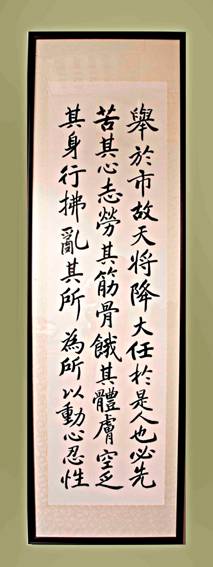
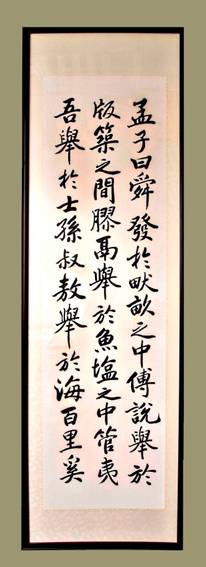
24 inches x 78 inches (each)
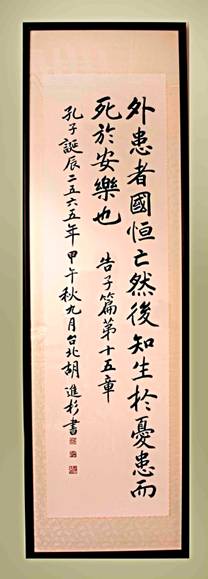
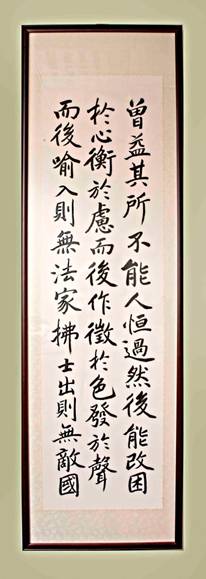
24 inches x 78 inches (each)
※ ※ ※
唐楷:唐朝(618-907 AD)在楷書方面的成就最為後世推崇,字體以法度嚴謹著稱,在中國書法史上與秦篆與漢隸並列。
The Regular Script (kaishu) is considered to have matured stylistically during the Tang Dynasty (618-907 AD). It is famous for the strictness and clearness of its strokes. In Chinese calligraphy, the Regular Script of the Tang Dynasty ranks alongside the Small Seal Script of the Qin Dynasty (221-206 BC) and the Clerical Script of the Han Dynasty (206 BC-220 AD).
孟子(前372年-前289年)名軻,鄒國(今山東鄒縣)人。東周戰國時期儒家代表人物,孟子之弟子萬章與其餘弟子著有《孟子》一書。繼承並發揚了孔子的思想,成為僅次於孔子的一代儒家宗師,有「亞聖」之稱,與孔子合稱為「孔孟」。
Mencius (372 – 289 BC) was a Chinese philosopher who is the most famous Confucian after Confucius himself. During the Warring States period (403–221 BC), Mencius served as an official and scholar at the Jixia (稷下) Academy in the State of Qi (1046 - 221 BC) from 319 to 312 BC. He expressed his filial devotion when he took three years leave of absence from his official duties for Qi to mourn his mother's death. Disappointed at his failure to effect changes in his contemporary world, he retired from public life. He is called ‘The Second Sage’ posthumously.
The Mencius, commonly called the Mengzi, is a collection of anecdotes and conversations of the Confucian thinker and philosopher Mencius (372 -289 BC). The work dates from the second half of the 4th century BC.
白話譯文
孟子說:舜從田間勞動中出身,傅說從築牆的土木工中被拔舉,膠鬲從魚鹽的買賣中被發掘推舉,管仲獲拔擢前是個囚徒,孫叔敖出身艱困的討海生活,百里奚原來是奴役市場被賣身的奴僕。所以,上天將要把重大使命降落到某人身上,一定要先使他的意志受到磨練,讓他的筋骨受到勞累,要他的身體忍飢挨餓,使他備受困苦,做事總是不能順利。這樣來提振他的心志,堅韌他的性情,增長他的才能。人總是要經常犯錯誤,然後纔能改正錯誤;心氣鬱結,殫思極慮,然後纔能奮發而起;顯露在臉色上,表達在聲音中,然後纔真正領悟及瞭解了。一個國家,內没有堅守執法的大臣和誠心輔佐並疾言直諫的賢士,外没有敵國憑凌的憂患,則常常是容易亡國的。由此可以知道,憂患使人生存,安逸享樂卻使人敗亡。
